Wynt Blog
Find an Article
Wynt Blog
Find an Article
Wynt Blog
Dec 8, 2025
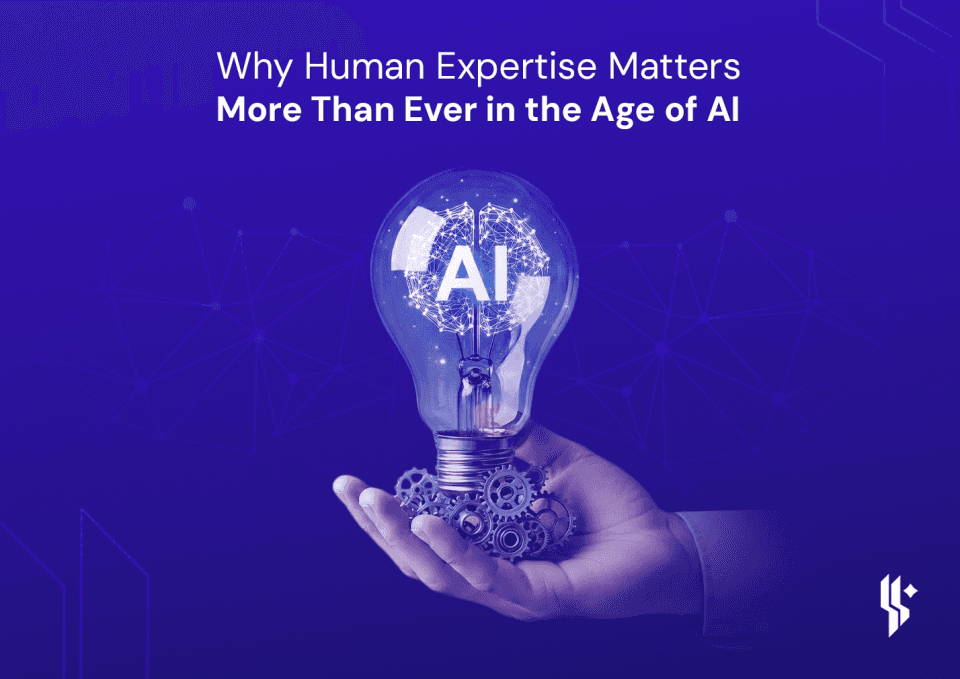
Why Human Expertise Matters More Than Ever in the Age of AI
Why Human Expertise Matters More Than Ever in the Age of AI
As generative AI evolves at record speed, many professionals worry about being replaced, especially in fields built on knowledge, analysis, and decision-making. When AI can draft reports, summarize data, or produce explanations in seconds, the question becomes unavoidable:
If AI can create, what is the role of human experts?
The answer is simple:
Human expertise has never been more important.
While AI can generate fast, competent outputs, it still lacks what defines high-value work, judgment, context, and the ability to ask the right questions. In the world of teaching, research, and hiring, that difference is everything.
AI Is Powerful: But Only in the Hands of Someone Who Knows What They’re Doing
When inexperienced users prompt an AI system, they may believe the output is accurate simply because it sounds confident. But without domain knowledge, they can't judge quality, spot gaps, or identify errors.
A communication professor evaluating an AI summary of Section 230 can instantly tell what’s missing.
A novice? They can’t tell if it’s correct, incomplete, or misleading.
This gap is exactly why human expertise remains irreplaceable.
Across industries, we’ve already seen what happens when AI is used without sufficient knowledge:
AI-generated government reports with factual errors
Research summaries filled with incorrect citations
Legal filings corrected only after human review
These issues weren’t identified by AI detectors; they were caught by people with deep subject expertise.
AI Doesn’t Replace Experts, It Amplifies Them
Sam Altman once described advanced AI as “having a team of PhD-level experts in your pocket.”
But this analogy misses one thing:
If you don’t know the field, you don’t even know what to ask your “team”.
AI mirrors your direction.
If the user lacks direction, AI becomes not a solution, but a risk.
That’s why the role of experts across industries including hiring is shifting:
• Less time generating content
• More time evaluating content
• More responsibility in ensuring accuracy, ethics, and context
In education, professors guide students not just toward answers, but toward better questions.
In hiring, recruiters and HR leaders do the same, guiding AI toward better evaluations, fairer decisions, and more accurate talent insights.
This is human-AI collaboration at its strongest.
What This Means for Hiring and the Future of Work
AI-driven recruitment tools like Wynt can analyze candidates, reduce bias, and automate countless steps in the hiring pipeline. But AI still relies on human expertise to:
• Set evaluation standards
• Interpret candidate data
• Validate insights
• Ensure fairness and accuracy
• Make final decisions
• AI provides the scale.
Human experts provide the direction.
Together, they create a hiring system that is faster, more efficient, and far more accurate.
Expertise Is the New Competitive Advantage
We’re entering a world where creation is easy, but evaluation is priceless.
The companies that thrive will be those that empower their teams to combine:
• AI speed
• Human judgment
• Deep domain knowledge
• Ethical decision-making
AI doesn't make expertise obsolete; it makes expertise essential.
Conclusion
The narrative that AI replaces experts is outdated and counterproductive.
In reality, AI elevates the value of experience, and the future of work will be defined by professionals who know how to guide, question, and refine what AI produces.
And that’s exactly where smart hiring begins.
Have More Questions?
Reach out Through
Latest Articles
Stay Updated with Our Latest Insights
Oct 23, 2025
Blind Recruitment
Wynt.AI uses AI-powered blind hiring to remove bias and build a fair, skills-based process.
Learn More
Oct 15, 2025
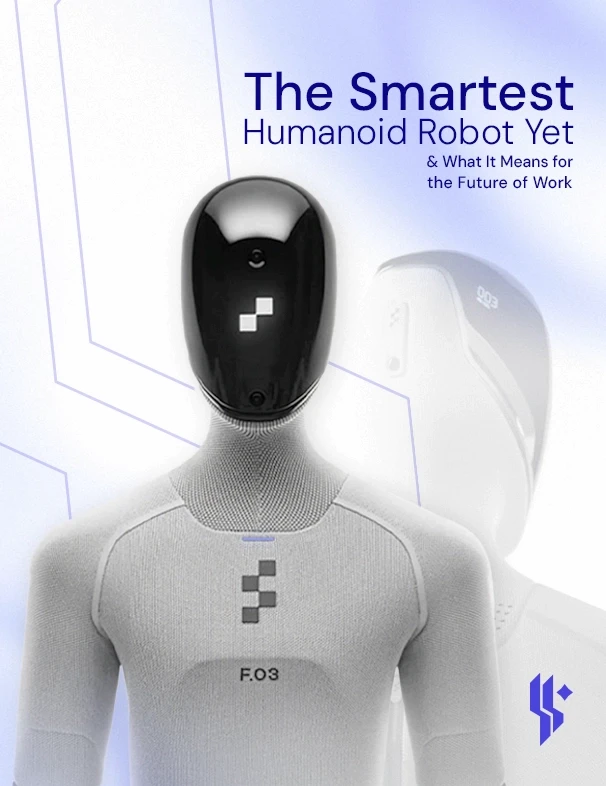
Figure 03
Figure AI unveils Figure 03, its smartest humanoid robot redefining the future of work
Learn More
Oct 7, 2025
RL Environments
See how RL environments make AI smarter, more reliable & ready for enterprise
Learn More
Dec 8, 2025
Why Human Expertise Matters More Than Ever in the Age of AI
Why Human Expertise Matters More Than Ever in the Age of AI
As generative AI evolves at record speed, many professionals worry about being replaced, especially in fields built on knowledge, analysis, and decision-making. When AI can draft reports, summarize data, or produce explanations in seconds, the question becomes unavoidable:
If AI can create, what is the role of human experts?
The answer is simple:
Human expertise has never been more important.
While AI can generate fast, competent outputs, it still lacks what defines high-value work, judgment, context, and the ability to ask the right questions. In the world of teaching, research, and hiring, that difference is everything.
AI Is Powerful: But Only in the Hands of Someone Who Knows What They’re Doing
When inexperienced users prompt an AI system, they may believe the output is accurate simply because it sounds confident. But without domain knowledge, they can't judge quality, spot gaps, or identify errors.
A communication professor evaluating an AI summary of Section 230 can instantly tell what’s missing.
A novice? They can’t tell if it’s correct, incomplete, or misleading.
This gap is exactly why human expertise remains irreplaceable.
Across industries, we’ve already seen what happens when AI is used without sufficient knowledge:
AI-generated government reports with factual errors
Research summaries filled with incorrect citations
Legal filings corrected only after human review
These issues weren’t identified by AI detectors; they were caught by people with deep subject expertise.
AI Doesn’t Replace Experts, It Amplifies Them
Sam Altman once described advanced AI as “having a team of PhD-level experts in your pocket.”
But this analogy misses one thing:
If you don’t know the field, you don’t even know what to ask your “team”.
AI mirrors your direction.
If the user lacks direction, AI becomes not a solution, but a risk.
That’s why the role of experts across industries including hiring is shifting:
• Less time generating content
• More time evaluating content
• More responsibility in ensuring accuracy, ethics, and context
In education, professors guide students not just toward answers, but toward better questions.
In hiring, recruiters and HR leaders do the same, guiding AI toward better evaluations, fairer decisions, and more accurate talent insights.
This is human-AI collaboration at its strongest.
What This Means for Hiring and the Future of Work
AI-driven recruitment tools like Wynt can analyze candidates, reduce bias, and automate countless steps in the hiring pipeline. But AI still relies on human expertise to:
• Set evaluation standards
• Interpret candidate data
• Validate insights
• Ensure fairness and accuracy
• Make final decisions
• AI provides the scale.
Human experts provide the direction.
Together, they create a hiring system that is faster, more efficient, and far more accurate.
Expertise Is the New Competitive Advantage
We’re entering a world where creation is easy, but evaluation is priceless.
The companies that thrive will be those that empower their teams to combine:
• AI speed
• Human judgment
• Deep domain knowledge
• Ethical decision-making
AI doesn't make expertise obsolete; it makes expertise essential.
Conclusion
The narrative that AI replaces experts is outdated and counterproductive.
In reality, AI elevates the value of experience, and the future of work will be defined by professionals who know how to guide, question, and refine what AI produces.
And that’s exactly where smart hiring begins.
Have More Questions?
Reach out Through
Stay Updated with Our Latest Insights
Oct 23, 2025
Blind Recruitment
Wynt.AI uses AI-powered blind hiring to remove bias and build a fair, skills-based process.
Learn More
Oct 15, 2025
Figure 03
Figure AI unveils Figure 03, its smartest humanoid robot redefining the future of work
Learn More
Dec 8, 2025
Why Human Expertise Matters More Than Ever in the Age of AI
Why Human Expertise Matters More Than Ever in the Age of AI
As generative AI evolves at record speed, many professionals worry about being replaced, especially in fields built on knowledge, analysis, and decision-making. When AI can draft reports, summarize data, or produce explanations in seconds, the question becomes unavoidable:
If AI can create, what is the role of human experts?
The answer is simple:
Human expertise has never been more important.
While AI can generate fast, competent outputs, it still lacks what defines high-value work, judgment, context, and the ability to ask the right questions. In the world of teaching, research, and hiring, that difference is everything.
AI Is Powerful: But Only in the Hands of Someone Who Knows What They’re Doing
When inexperienced users prompt an AI system, they may believe the output is accurate simply because it sounds confident. But without domain knowledge, they can't judge quality, spot gaps, or identify errors.
A communication professor evaluating an AI summary of Section 230 can instantly tell what’s missing.
A novice? They can’t tell if it’s correct, incomplete, or misleading.
This gap is exactly why human expertise remains irreplaceable.
Across industries, we’ve already seen what happens when AI is used without sufficient knowledge:
AI-generated government reports with factual errors
Research summaries filled with incorrect citations
Legal filings corrected only after human review
These issues weren’t identified by AI detectors; they were caught by people with deep subject expertise.
AI Doesn’t Replace Experts, It Amplifies Them
Sam Altman once described advanced AI as “having a team of PhD-level experts in your pocket.”
But this analogy misses one thing:
If you don’t know the field, you don’t even know what to ask your “team”.
AI mirrors your direction.
If the user lacks direction, AI becomes not a solution, but a risk.
That’s why the role of experts across industries including hiring is shifting:
• Less time generating content
• More time evaluating content
• More responsibility in ensuring accuracy, ethics, and context
In education, professors guide students not just toward answers, but toward better questions.
In hiring, recruiters and HR leaders do the same, guiding AI toward better evaluations, fairer decisions, and more accurate talent insights.
This is human-AI collaboration at its strongest.
What This Means for Hiring and the Future of Work
AI-driven recruitment tools like Wynt can analyze candidates, reduce bias, and automate countless steps in the hiring pipeline. But AI still relies on human expertise to:
• Set evaluation standards
• Interpret candidate data
• Validate insights
• Ensure fairness and accuracy
• Make final decisions
• AI provides the scale.
Human experts provide the direction.
Together, they create a hiring system that is faster, more efficient, and far more accurate.
Expertise Is the New Competitive Advantage
We’re entering a world where creation is easy, but evaluation is priceless.
The companies that thrive will be those that empower their teams to combine:
• AI speed
• Human judgment
• Deep domain knowledge
• Ethical decision-making
AI doesn't make expertise obsolete; it makes expertise essential.
Conclusion
The narrative that AI replaces experts is outdated and counterproductive.
In reality, AI elevates the value of experience, and the future of work will be defined by professionals who know how to guide, question, and refine what AI produces.
And that’s exactly where smart hiring begins.
Have More Questions?
Reach out Through
Stay Updated with Our Latest Insights
Oct 23, 2025
Blind Recruitment
Wynt.AI uses AI-powered blind hiring to remove bias and build a fair, skills-based process.
Learn More
Oct 15, 2025
Figure 03
Figure AI unveils Figure 03, its smartest humanoid robot redefining the future of work
Learn More